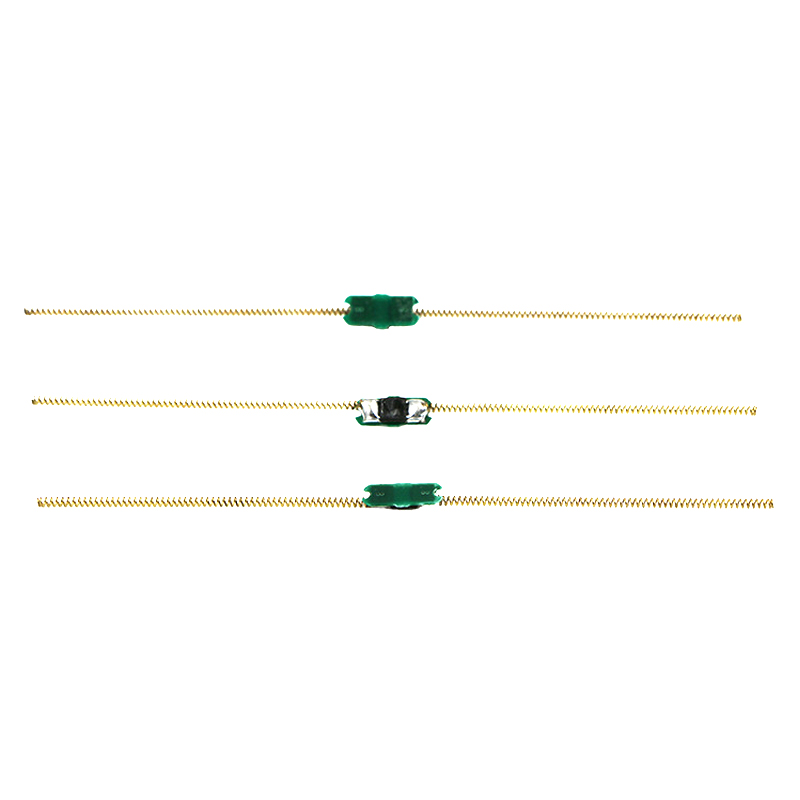
Material: Spring, PCB
Storage Temperature: -40 to +85°C
Operating Temperature: -40 to +200°C
Dimensions: 84x1mm, 68x1mm, 50x1mm
Weight: 0.2g
Color: Gold/Green
Standard: ISO/IEC 18000-6C (EPC Gen2)
Chip: Alien Higgs-3
EPC Memory: 96 bits
User Area Memory: 512 bits
Read Range (2W ERP): 2.4 meters
Data Retention: >10 years
Other Parameters:
Installation Method: Embedded
Customization Options: Custom sizes, programming
Packaging Specifications: 100 pieces/bag
Application Scenarios: Tire brand management, tire asset management, automated tire production management, logistics and vehicle management
Description
The application of RFID technology in the tire industry enables easier and more accurate tracking of tires than other existing technologies, as well as effective tire asset management—a role that standard product barcodes and tire part numbers cannot fulfill.
The usage history of tires requires tracking and recording. Previously, traditional methods relied on mileage to assess tire wear, but due to the complexity and variability of road conditions, this approach lacks accuracy. Another method involved manually recording mileage. Both of these traditional management approaches were ineffective because tires lacked a unique, non-duplicative identifier—similar to an “ID number”—making it difficult or even impossible to track and collect data, and thus to implement effective tire management.
However, once an electronic tag (RFID) is embedded in a tire, it effectively gains an “ID number.” By referencing this “ID number,” we can access the tire’s data, which reveals whether the tire remains in a safe condition, has undergone multiple repairs, or requires replacement. This significantly enhances tire safety during use.
Features
Spring + PCB Structure
High Sensitivity and Stable Read/Write Performance
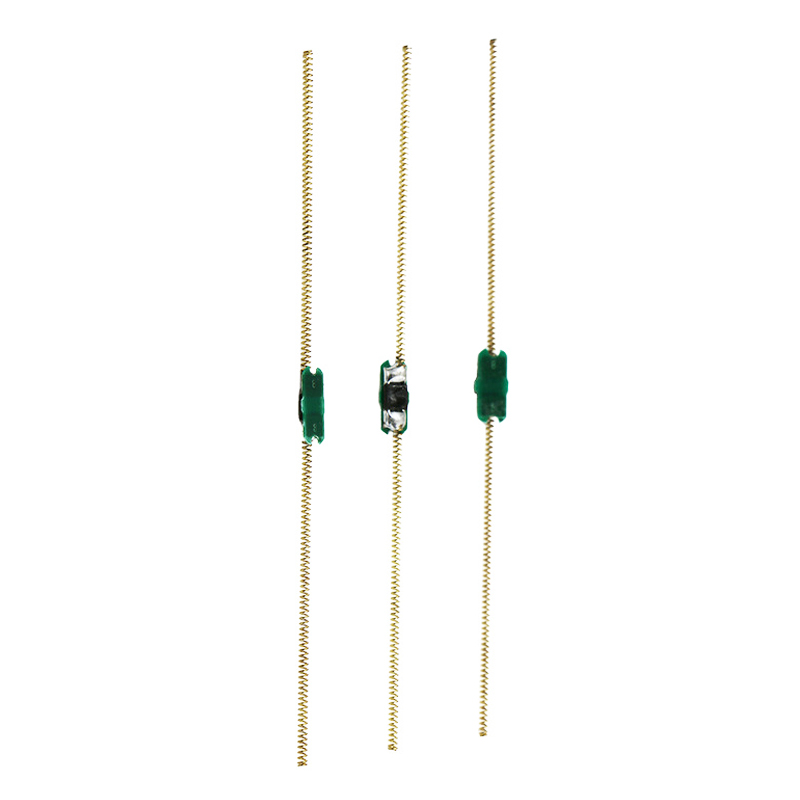
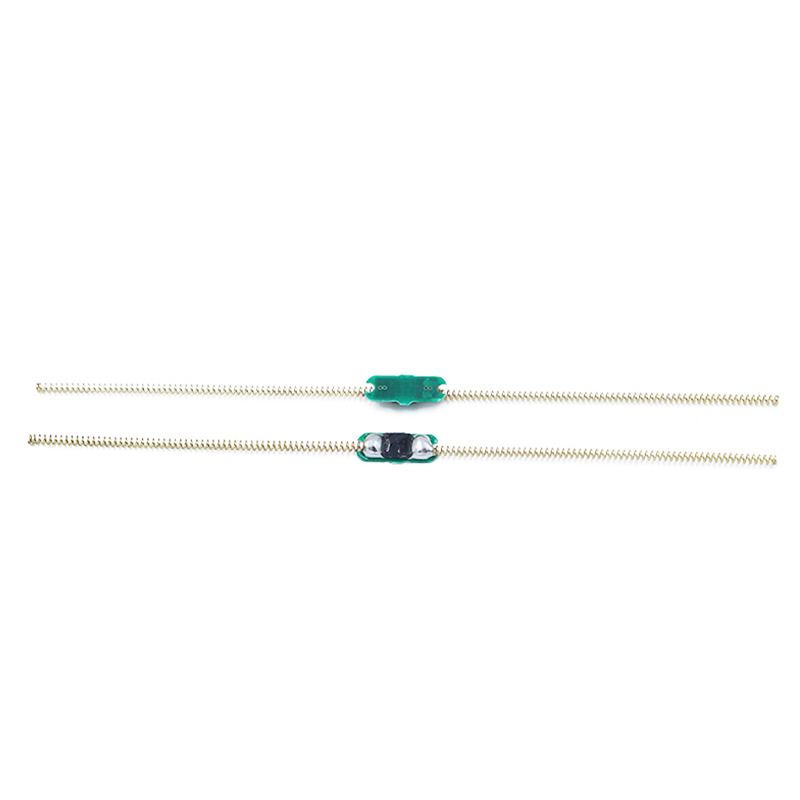
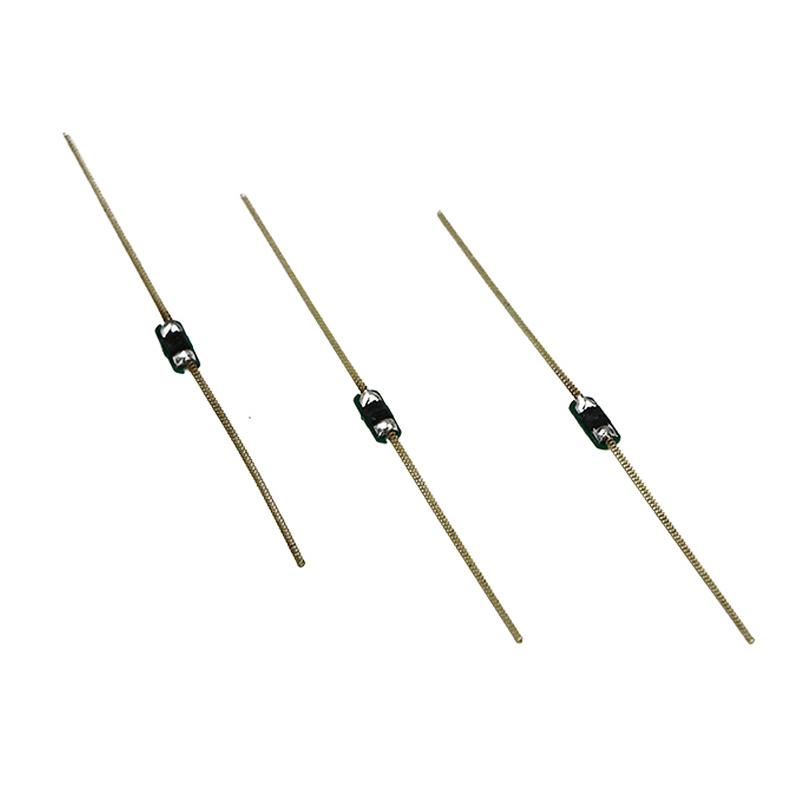
The tire tag consists of an RF module encapsulated in black resin on an FR-4 or similar substrate, along with a pair of helical spring antennas. These components are soldered together using specific manufacturing processes to ensure the tag functions properly during tire production and use.
Multiple Chip Options
Over 100,000 Read/Write Cycles
The chip can be selected from Monza 3, Minza 40T, Ucode 7M, H3, or H4. The read range varies from approximately 0 to 5 meters depending on the reader, with read/write cycles far exceeding 100,000. Tag data is retained for approximately 10 years.
Withstands High Temperatures Up to 210°C
Excellent Heat Resistance and Corrosion Resistance
With excellent heat resistance, the embedded tag maintains normal performance even when exposed to the high-temperature, high-pressure conditions of rubber vulcanization.
Flexible Deformable Antenna
Excellent Deformability and Signal Gain
The spiral-shaped spring antenna ensures the tag withstands various stresses and flexural deformations during tire manufacturing and use, while providing excellent signal gain for electromagnetic waves.
Wide Range of Applications
Product Traceability/Anti-Counterfeiting
Tire tags are used for tire management in trucks, cars, motorcycles, and various other private, commercial, public, and government vehicles. Due to their compact size, these spring tags can also be embedded into other items during the production process, such as suitcases and boxes.
Application
Bus tire management, truck tire management, automated tire production management, and logistics vehicle management.